Natural Basra pearls are effectively unobtainable at sensible prices, so almost every pearl sold today is cultured. That is not a defect, but it should be stated plainly. Ask for nacre thickness, and handle a pearl gently: at 2.5 to 4.5 on the Mohs scale it scratches more easily than any other stone in this list.
What pearl actually is
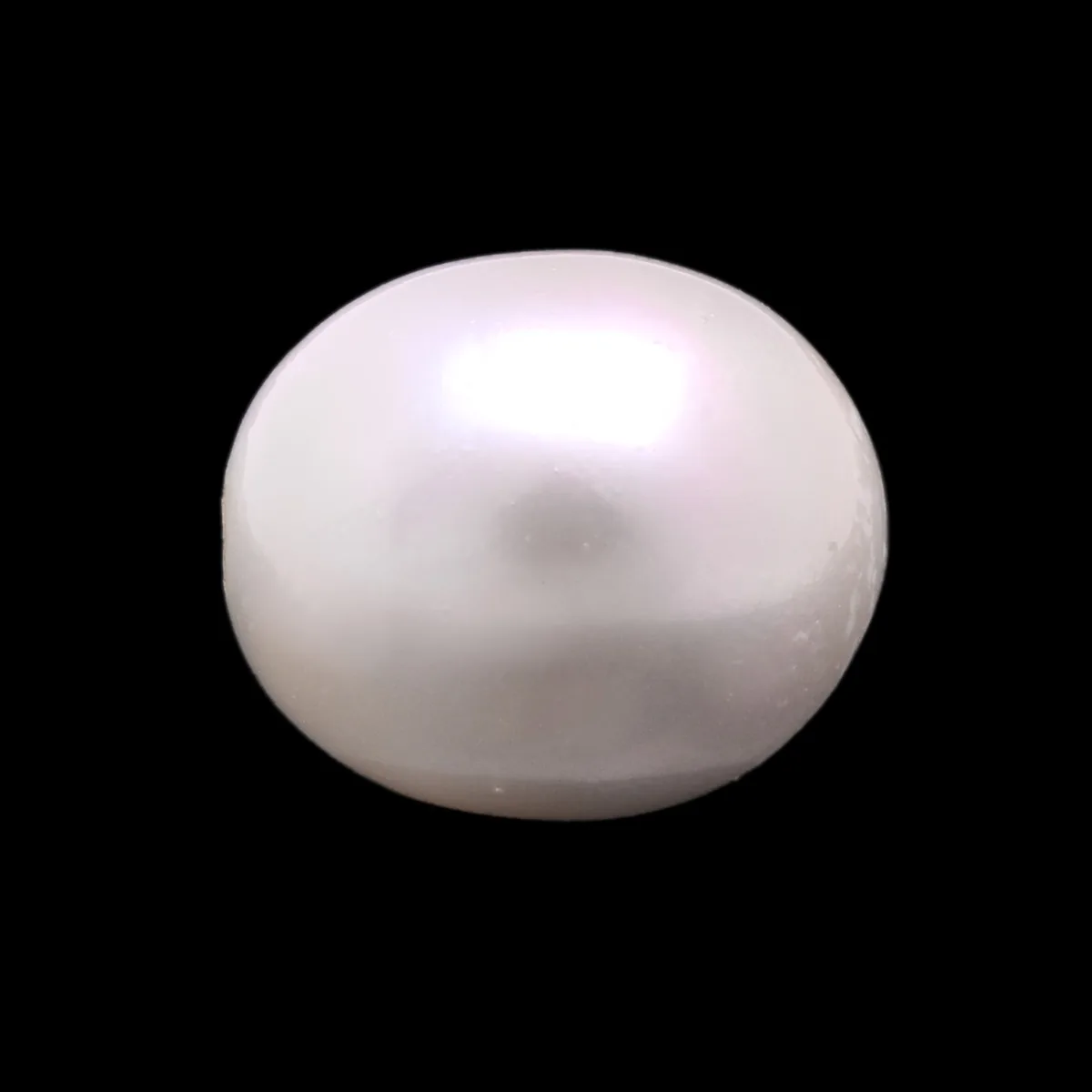
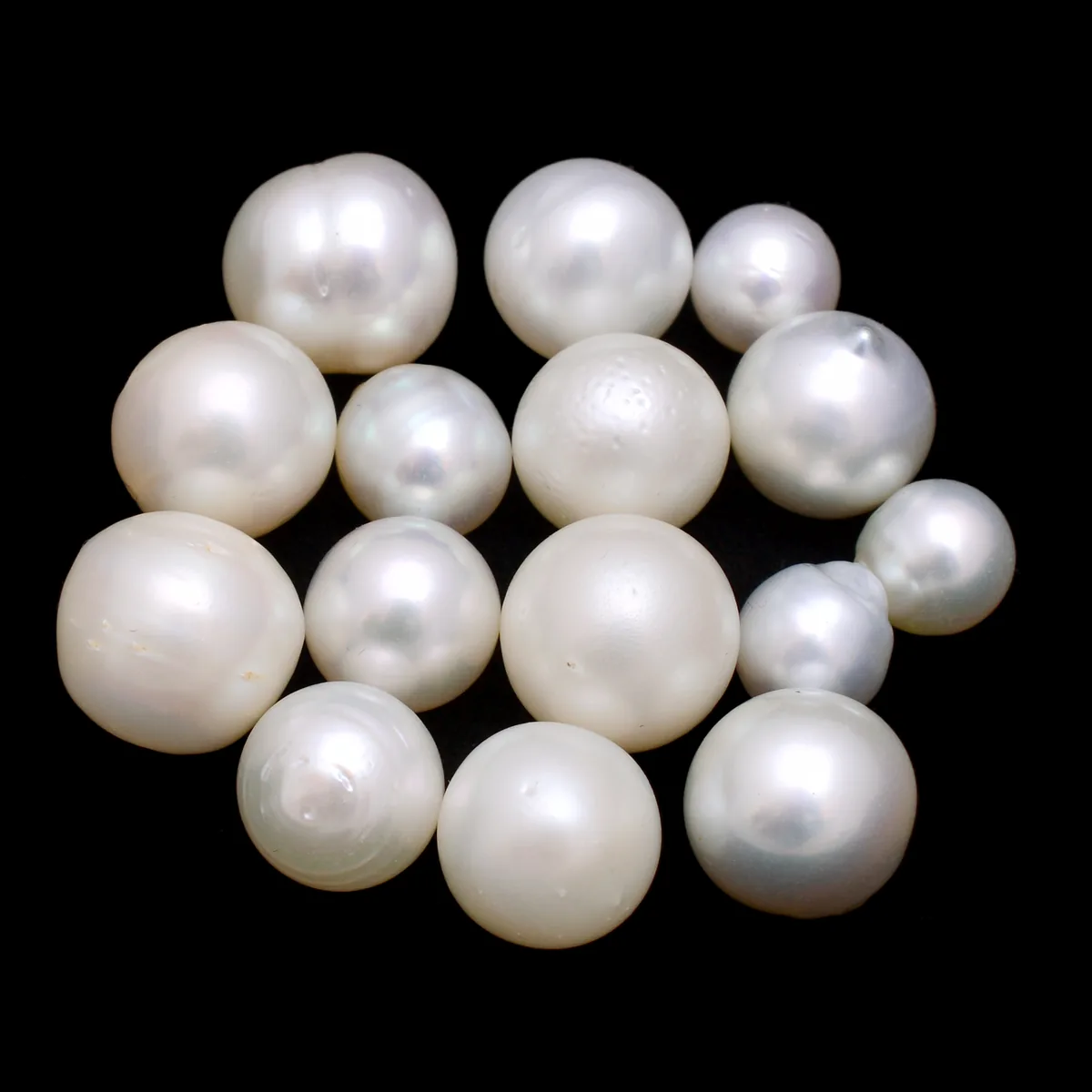
A South Sea pearl is grown by Pinctada maxima, the largest pearl oyster, in the waters off Australia, Indonesia and the Philippines. Its size is what most people notice, but nacre thickness is what determines whether it will still look like this in thirty years. Lustre is the quality to judge it on: a fine pearl looks lit from inside rather than shiny on the outside, and you should be able to see a sharp reflection of the window in its surface.
What gets sold as Moti instead
Imitation pearls are older than cultured ones and are still everywhere. Glass or plastic beads coated in essence d’orient, a lacquer originally made from fish scales, are the classic version, and they are easy to catch: rub a pearl gently against the edge of a tooth, where a real one feels faintly gritty from its nacre platelets and an imitation feels glassy smooth. Mabe pearls, which are half domes grown against the shell, are sold as full pearls in mounts that hide the flat back. The more expensive confusion is a genuine pearl of the wrong kind, since Chinese freshwater pearls now reach sizes and shapes that were once diagnostic of South Sea material and are worth a fraction of it. Dyed pearls are also routine, and dye tends to give itself away by pooling at the drill hole.
What to look for, and what to ask
Natural pearls, formed without human intervention, are effectively unobtainable at any sensible price, so essentially every pearl sold today is cultured. That is not a defect and it should be stated plainly rather than left ambiguous. Ask for nacre thickness. Then look at the surface at a shallow angle for blistering or a dull chalky patch, both of which indicate thin nacre over the bead, and turn the pearl to check whether the lustre stays even all the way round.
Weight, and what it costs in this stone
Pearls are the one Navratna stone the trade does not really price by weight. They are sold by diameter in millimetres, and because volume follows the cube of the diameter, a small step in millimetres is a large step in carats and a much larger one in price. A prescribed ratti in Moti is therefore usually reachable without much difficulty, which is unusual among the nine, and it means the money is better spent on nacre thickness and lustre than on getting a fraction of a millimetre larger. A big pearl with thin nacre will go dull within a decade; a smaller one with thick nacre will outlive its owner.
Wear and care
At 2.5 to 4.5 on the Mohs scale a pearl is the softest thing in the Navratna set and scratches on almost anything, including other jewellery in the same box. Nacre is also dissolved by acid, so perfume, hairspray and sweat all attack it. Wipe with a soft damp cloth after wearing, store it apart from harder stones, and never clean it ultrasonically.
As practised in Vedic tradition. Your astrologer’s instruction takes precedence over any general rule.