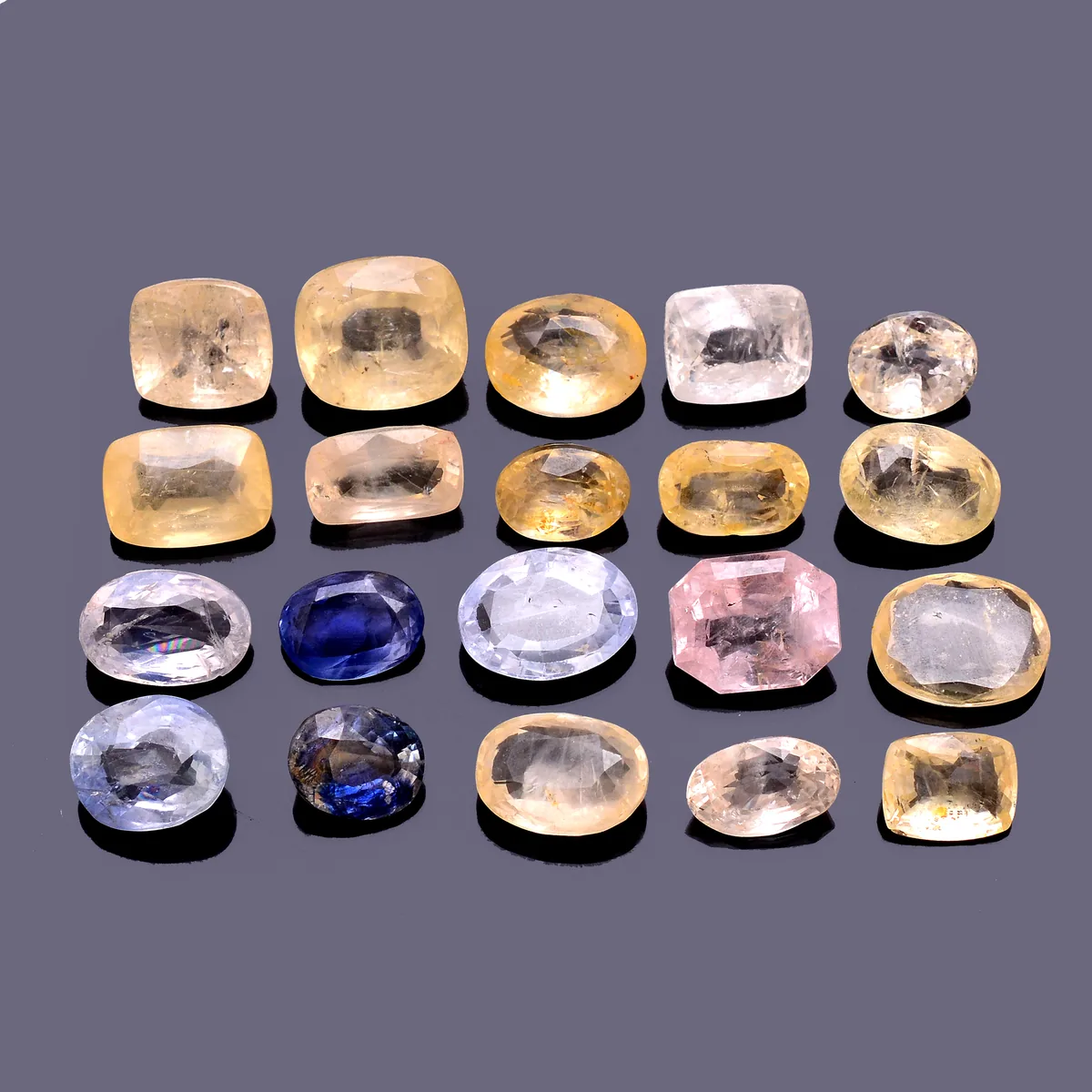
Because Neelam carries such a strong reputation, it also attracts the most substitution. Iolite, blue spinel, tanzanite and glass filled corundum are all sold as Neelam. Ask for a report that identifies the species as natural corundum and states the treatment. Traditional practice is to wear Neelam on trial before committing to it.
What blue sapphire actually is
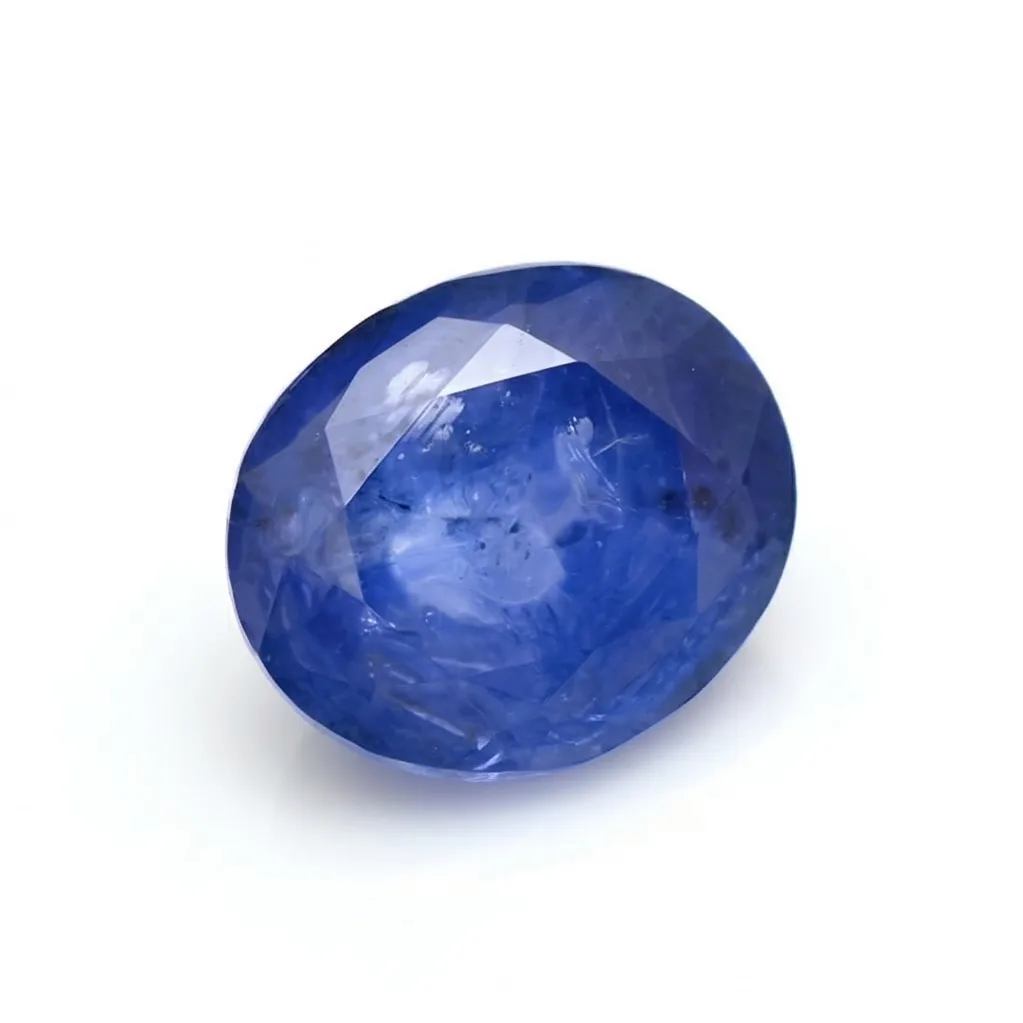
Blue sapphire is corundum coloured by iron and titanium. Sri Lankan, still traded as Ceylon, is the classic source for the lighter, brighter cornflower blues, while Burmese and Kashmir material runs deeper and velvety. What separates an ordinary stone from a good one is whether the blue holds its saturation under warm indoor light instead of closing up and reading almost black.
What gets sold as Neelam instead
Iolite, sold in India as neeli or kaka neeli, is the traditional inexpensive stand-in and is usually offered honestly as such. Blue spinel, tanzanite, blue topaz, blue zircon and glass all appear as Neelam too. Because Neelam has the strongest reputation of any Navratna stone, it also attracts the most deliberate deception: synthetic blue sapphire is abundant and cheap, and glass filled corundum, where fractures are impregnated to fake clarity, is natural sapphire that has been made to look like far better natural sapphire. Lattice diffused material is the third problem, with colour driven in from the surface rather than grown into the crystal. A report stating natural corundum, and stating the treatment explicitly, is what separates these, and none of them can be told apart reliably by eye.
What to look for, and what to ask
Heat treatment is routine, permanent, accepted and priced in, and an unheated stone of the same colour will carry a substantial premium. Beryllium or titanium lattice diffusion is a different thing entirely: it drives colour in from the surface, it must be disclosed separately, and it is not what people mean when they say heated. Ask the report which one it is. Then turn the stone and look for straight colour banding, which tells you how evenly the colour is distributed.
Weight, and what it costs in this stone
Blue sapphire darkens as it gets larger, because a deeper stone shows more of its own colour, so a saturation that reads well at two carats can read close to black at eight. That is the constraint on weight in Neelam and it is optical rather than financial. If you are working to a prescribed ratti at a substantial number, look for Ceylon material rather than Burmese or Australian, since its lighter starting tone survives the extra depth. Traditional practice is to wear Neelam on trial before committing to it, and any dealer worth buying from will understand that request.
Wear and care
Corundum is 9 on the Mohs scale, second only to diamond, so it takes daily wear better than almost anything else you could set. It is still brittle along a hard knock, and a stone with a reaching fissure should stay out of an ultrasonic cleaner. Warm water, mild soap and a soft brush are enough.
As practised in Vedic tradition. Your astrologer’s instruction takes precedence over any general rule.