Dyed and reconstituted coral is common and difficult to spot by eye. Buy only against a report that confirms the material is natural and states whether it has been dyed or stabilised. Untreated coral of good colour is genuinely scarce, and a price that looks too easy usually is.
What red coral actually is
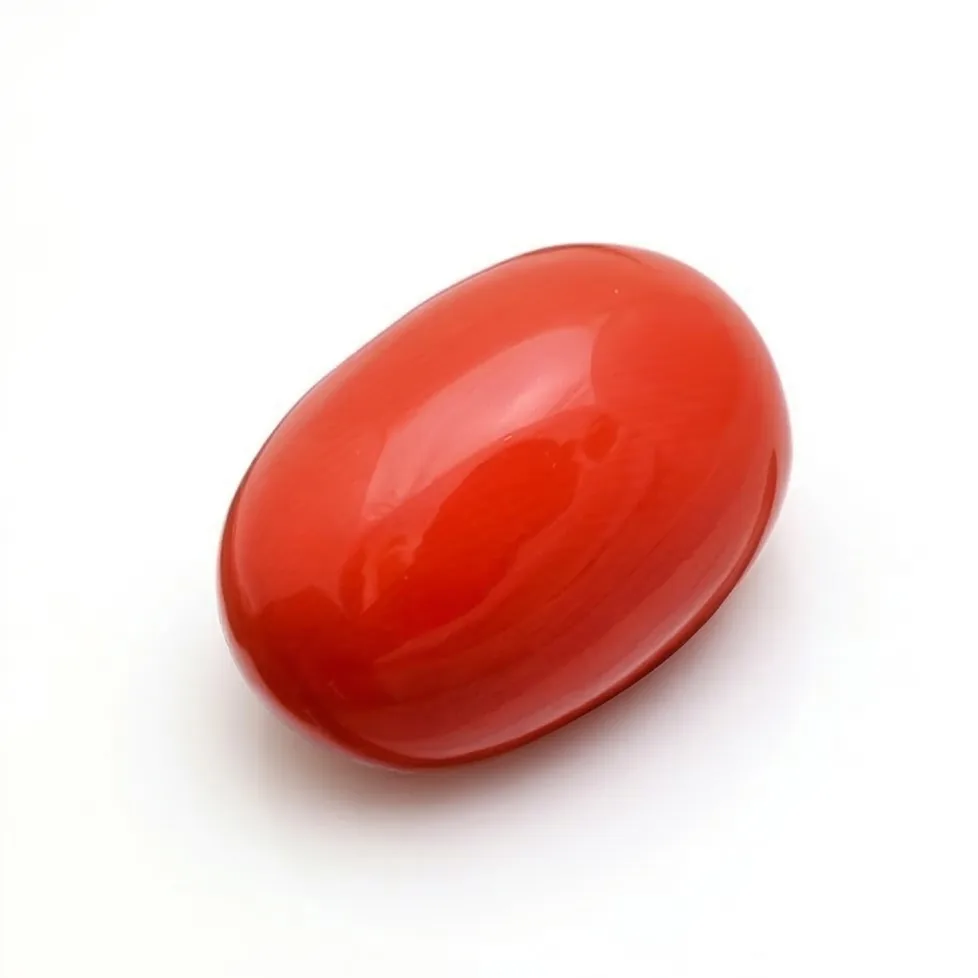
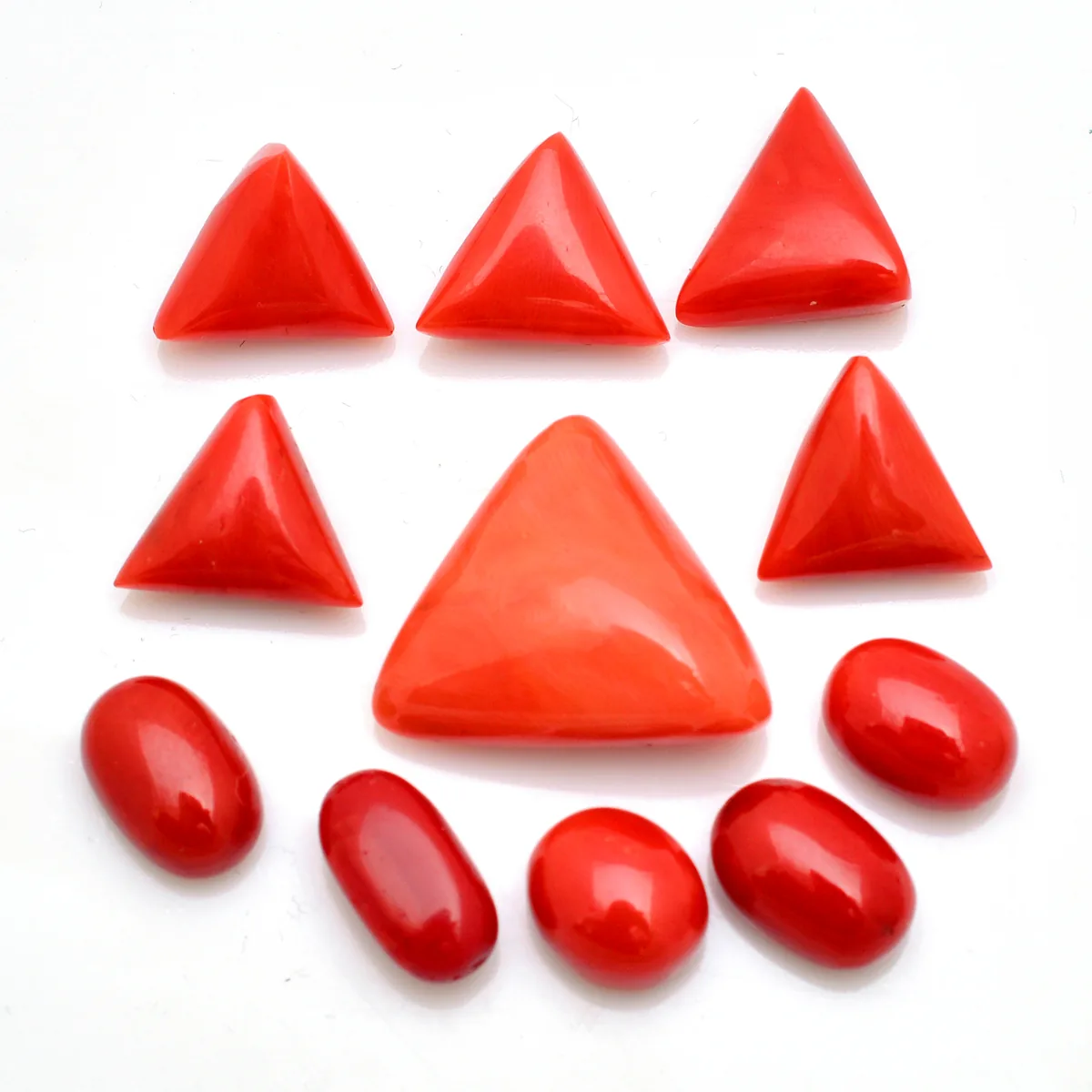
Red coral is not a mineral. It is the skeleton of a colony of marine animals, laid down as calcium carbonate over decades, which is what makes it one of only two organic materials among the nine Navratna stones. Mediterranean Corallium rubrum, traded as Italian coral, is the classic Moonga material and runs to a deep even ox-blood; Pacific and Japanese species reach comparable colours with a different structure.
What gets sold as Moonga instead
Dyed coral is the substitution to expect, and it comes in two forms. Cheap pale coral of a different species, often bamboo coral, is dyed red and sold as Italian or Japanese material. Separately, white howlite and magnesite, both soft porous minerals, take dye readily and are sold as coral outright. Reconstituted coral is powdered genuine coral bound with resin and pressed into shape, which is not quite an imitation and not quite the real thing, and it should be disclosed. Gilson created a synthetic coral in the 1970s that is still traded. Plastic and glass account for most of what is sold to tourists. In every case the test is the same: look for structure, since natural coral has fine parallel striations along its length and concentric growth rings across a cut end, and none of the substitutes has both.
What to look for, and what to ask
Dyed coral and reconstituted coral, which is powdered coral bound with resin and pressed, are both widespread and both much cheaper than the real thing. Look along the surface for the fine parallel longitudinal striations natural coral carries, and look into any drill hole or fissure for colour pooling more strongly there than on the surface, which is what dye does. Reconstituted material tends to an unnaturally uniform colour with no structure visible at all.
Weight, and what it costs in this stone
Coral is light, with a specific gravity around 2.65 against corundum’s 4.0, so a given weight of coral covers far more area than the same weight of ruby or sapphire. A prescribed ratti in Moonga therefore produces a physically large piece, which is worth knowing before you commission a mount for it. Coral is also among the least expensive of the nine per carat, so weight is rarely the binding constraint. What costs money is colour: an even, untreated, deep oxblood with no white showing is genuinely scarce, and that is where a Moonga budget is best spent.
Wear and care
Coral is soft, roughly 3 to 4 on the Mohs scale, and being calcium carbonate it is attacked by acid, including perfume, vinegar and sweat. Put it on last and take it off first, wipe it with a soft damp cloth, and never let it near an ultrasonic cleaner or a household cleaning product.
As practised in Vedic tradition. Your astrologer’s instruction takes precedence over any general rule.