Hessonite is rarely treated, which makes it one of the more straightforward Navratna stones to buy. The main things to check are colour saturation, which should be lively rather than muddy, and eye clean transparency in the face up position. Spessartite garnet is sometimes offered in its place at a higher price.
What hessonite actually is
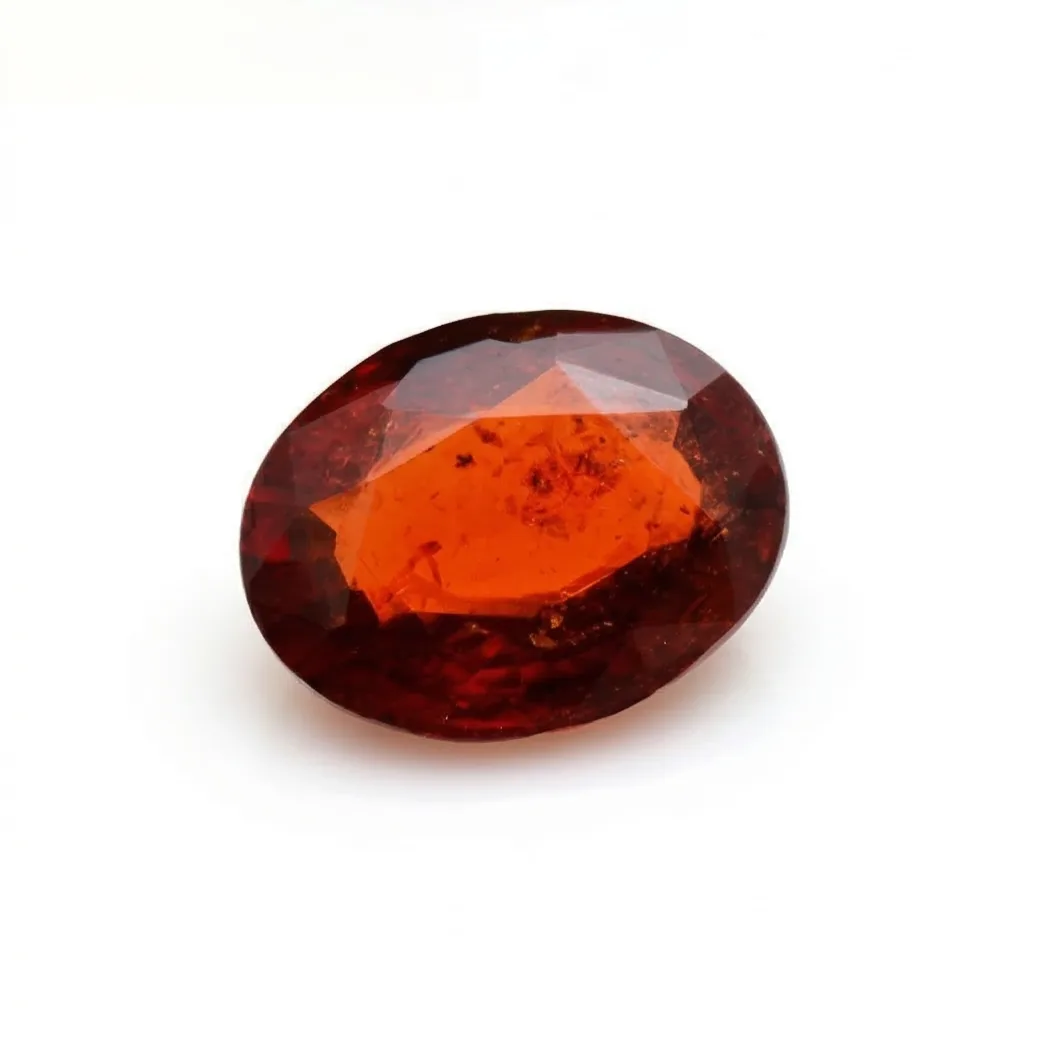
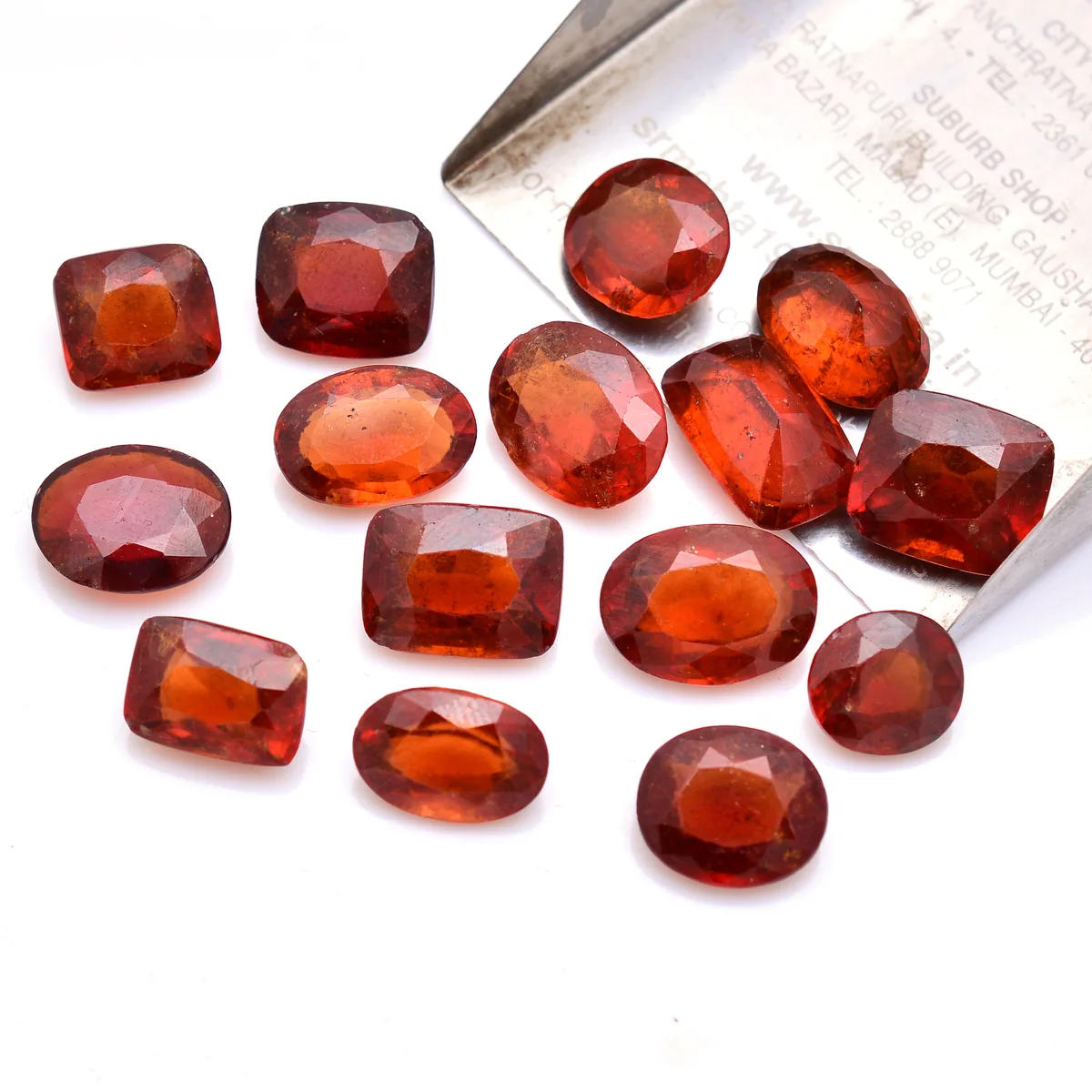
Hessonite is the orange to cinnamon-brown variety of grossular garnet, and the trade name for it is cinnamon stone. Its most recognisable feature is internal: a roiled, treacly, heat-shimmer texture that runs through almost every hessonite ever cut. That texture is diagnostic of the species and entirely normal, not damage and not a reason to reject a stone.
What gets sold as Gomed instead
Spessartite garnet is the substitution that costs you money, because it is a more expensive garnet than hessonite and is sometimes offered as Gomed at spessartite prices to a buyer who does not know the difference. In the other direction, citrine, brown zircon, smoky quartz and glass all reach a honey orange cheaply. Glass is the easiest of all of these to catch: hold the stone to a light and look for the roiled, treacly, heat-shimmer texture that runs through almost every hessonite ever cut, since glass looks flat and dead beside it and often carries round gas bubbles that no natural stone contains. Hessonite is essentially never treated, so a seller who starts hedging about treatment is telling you something about the stone or about themselves.
What to look for, and what to ask
Garnet is one of the very few gemstones that is essentially never treated, so a hessonite should need no treatment disclosure at all, and a seller offering one should be able to say so plainly. What is worth checking is that the stone is grossular hessonite rather than spessartite garnet, citrine or glass, all of which reach a similar colour. Hold it to a light and look for the shimmer; glass will look flat and dead by comparison, and may carry round gas bubbles.
Weight, and what it costs in this stone
Gomed is the least expensive of the nine per carat by a wide margin, which changes the shape of the decision entirely. A prescribed weight that would be unreachable in Neelam or Manikya is comfortably reachable here, so weight is almost never the binding constraint. Transparency is. A large hessonite has a long light path, and the internal swirl that gives the species its character turns to murk if the material is not clean enough to carry it. Buy the cleanest stone that meets the weight rather than the largest stone in the budget.
Wear and care
At 7 to 7.5 on the Mohs scale, garnet is durable enough for a ring worn regularly but softer than sapphire and easier to scratch on a hard surface. It has no cleavage, so it takes a knock well. Warm soapy water and a soft brush; keep it away from steam cleaning.
As practised in Vedic tradition. Your astrologer’s instruction takes precedence over any general rule.