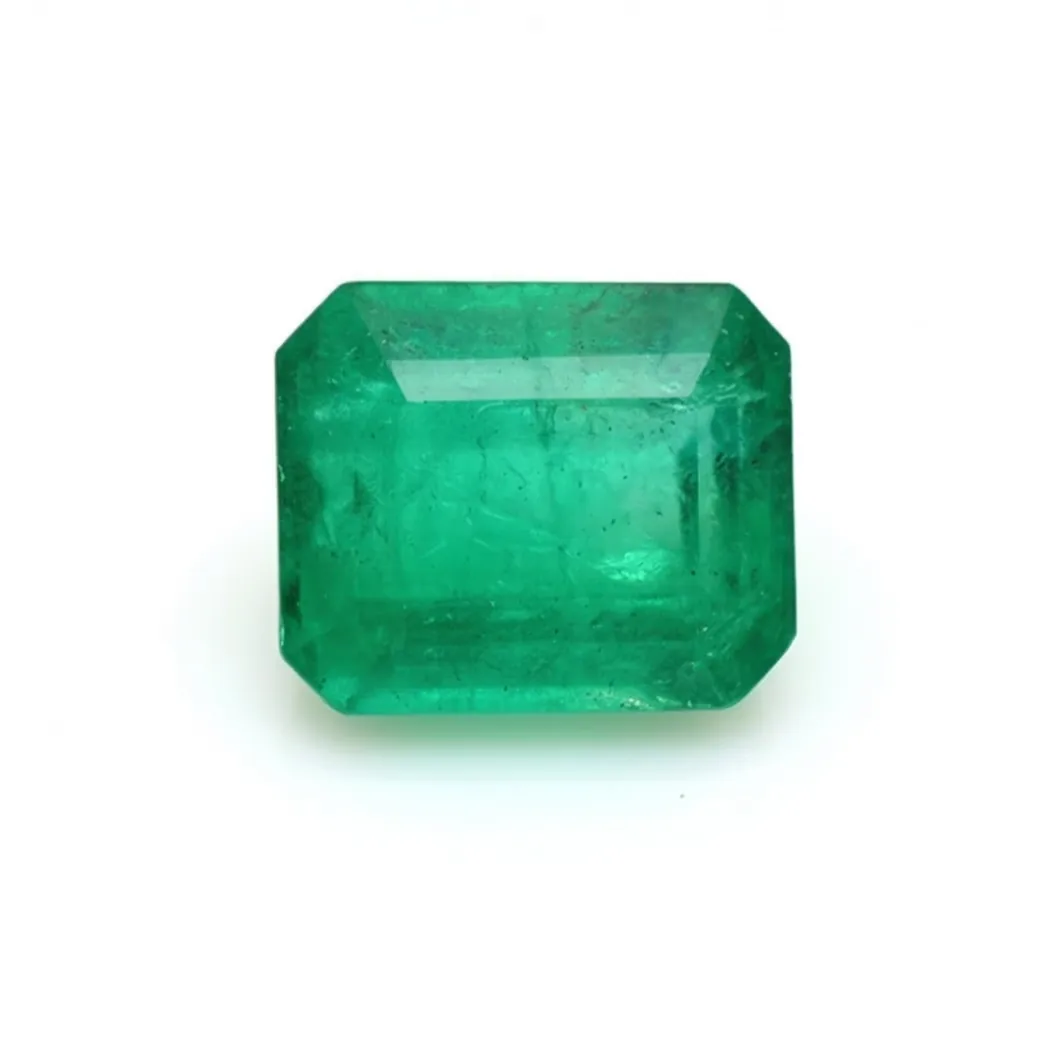
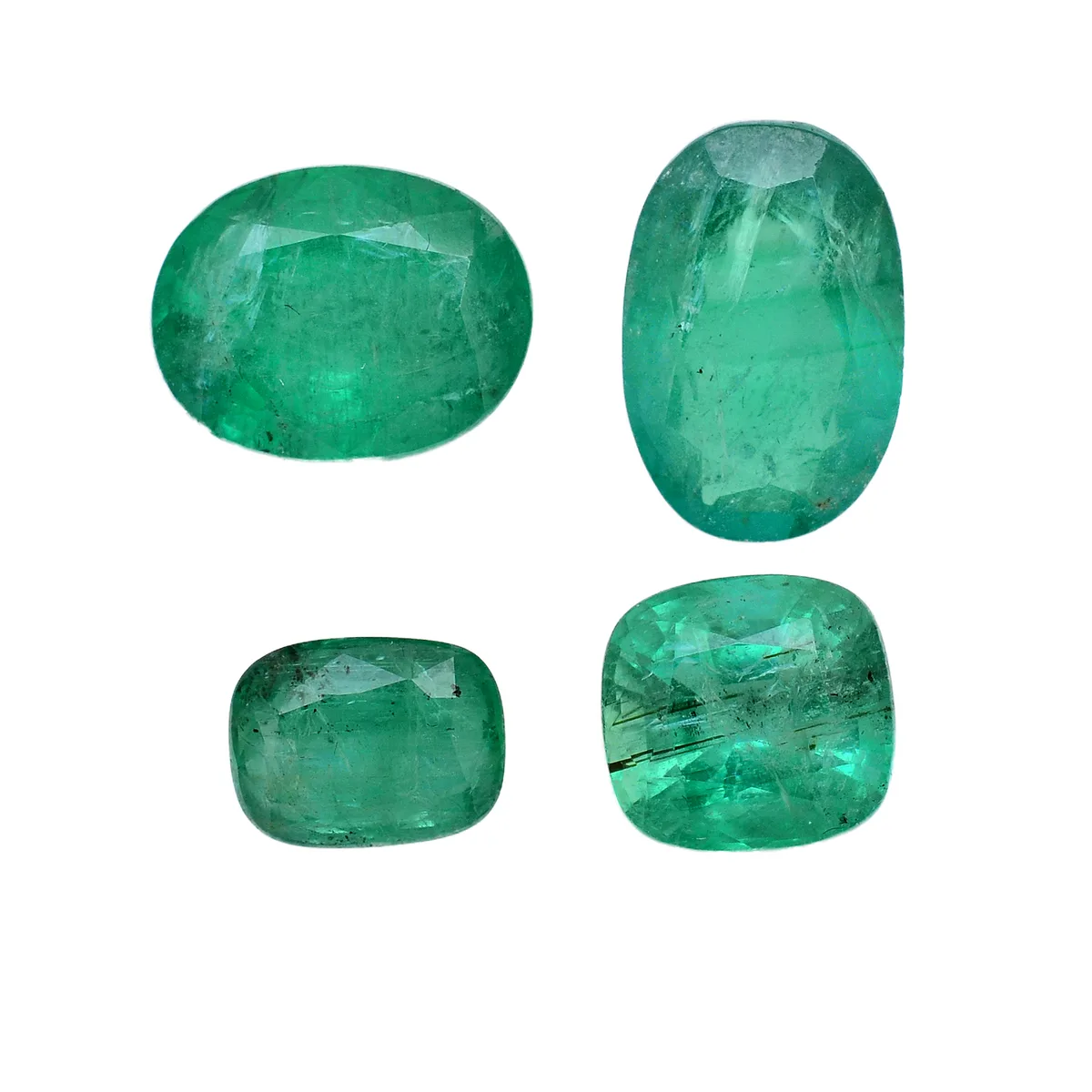
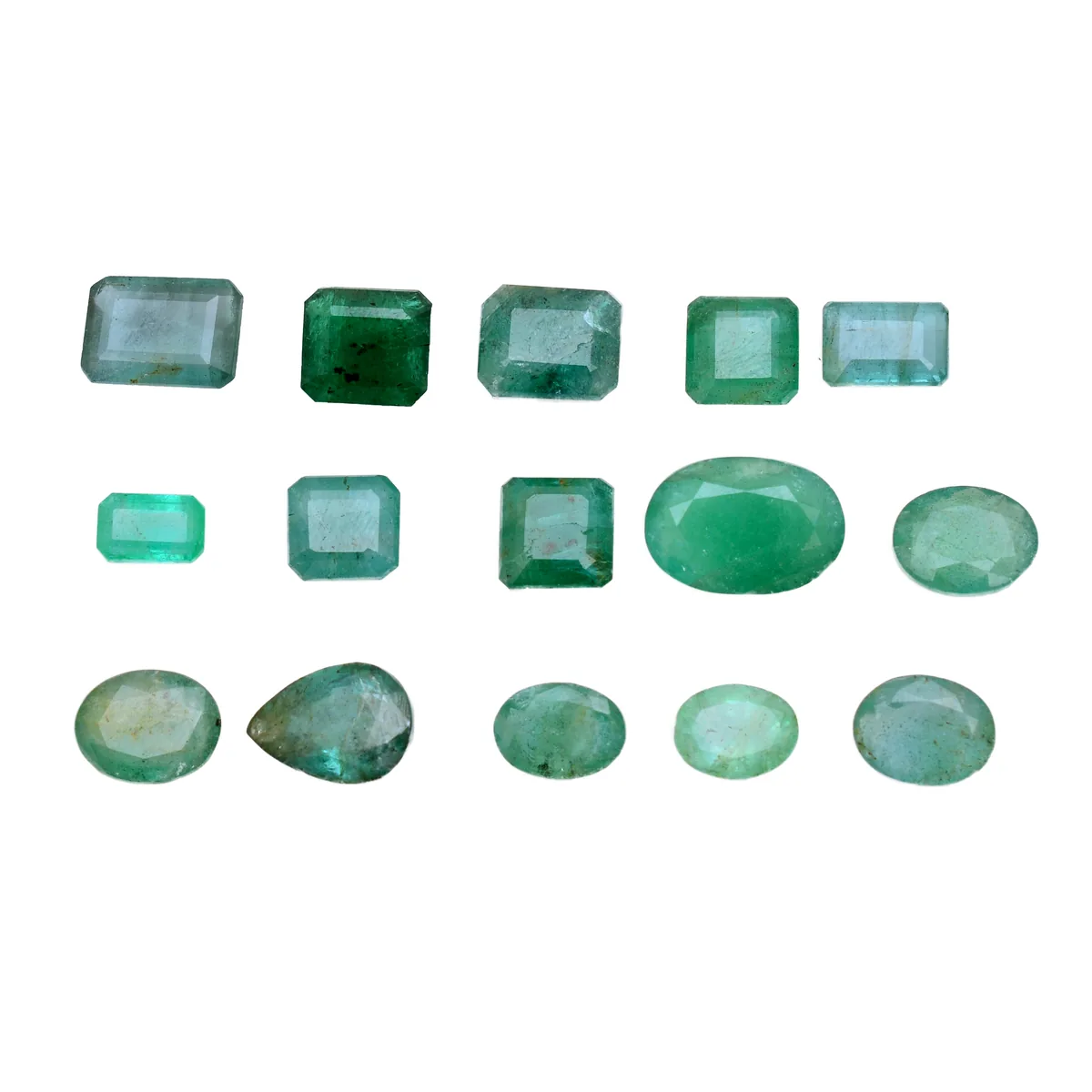
Nearly all emeralds are treated with oil or resin to reduce the visibility of fractures. The question is not whether a stone is treated but how much, so look for a report grading the treatment as none, minor, moderate or significant. Avoid resin filled stones if you want long term stability, and never clean an emerald ultrasonically.
What emerald actually is
Emerald is green beryl, coloured by chromium or vanadium. It is the one major gemstone where visible inclusions are normal rather than a defect: the trade calls the internal landscape a jardin and grades emerald on colour first and clarity second, which is the reverse of how a diamond is judged. Zambian material tends to a slightly bluish, more saturated green and often runs cleaner than Colombian, with a higher iron content.
What gets sold as Panna instead
The commonest substitution is not a different mineral at all but a lesser one of the same family. Pale green beryl is not emerald, the boundary between the two is a matter of saturation, and material sitting below the line is routinely sold above it. Peridot, green tourmaline, green fluorite and dyed green quartz all appear as Panna, and so does the soude emerald, a doublet of two colourless pieces cemented with green glue, which is old and still circulating. Synthetic emerald deserves separate attention: flux grown and hydrothermal emerald have been manufactured since the 1930s, look better than most natural material, and cost very little. Because emeralds are expected to contain inclusions, buyers talk themselves into synthetics more easily here than in any other species. A report identifying the stone as natural beryl is the only reliable answer.
What to look for, and what to ask
Nearly every emerald sold anywhere has had its surface-reaching fissures filled to improve apparent clarity, and a report will grade that as none, minor, moderate or significant. That grade is worth more to you than the carat weight. Ask whether the filler is cedarwood oil, which can be redone by any competent workshop, or a hardened resin, which cannot be removed without risk. An emerald described as having no enhancement at all, at an ordinary price, is the claim to be most careful about.
Weight, and what it costs in this stone
Emerald has a specific gravity around 2.7, well below corundum, so it spreads: a five carat emerald covers noticeably more finger than a five carat sapphire and reads larger than its weight. A prescribed ratti in Panna therefore goes further than the same number in Neelam or Manikya. The real trade-off in emerald is never weight against price but weight against clarity, because larger crystals reach the cutter with more fissures and therefore carry more filling. Given the choice, take the smaller stone with less treatment on its report.
Wear and care
At 7.5 to 8 on the Mohs scale emerald is hard, but the fissures that run through most stones make it far less tough than that number suggests. Never put an emerald in an ultrasonic or a steam cleaner: both will strip the oil and can open a fissure. Wipe it with a damp cloth, and take it off before anything strenuous.
As practised in Vedic tradition. Your astrologer’s instruction takes precedence over any general rule.